 BASKETBALL SCHOOL "TORNADO"
 Tornado Basketball School U14 (2011) – bronze at Coppa Alberto Giove ’36 after a three-overtime thriller in Monza!
2026 birželis 19 d., penktadienis
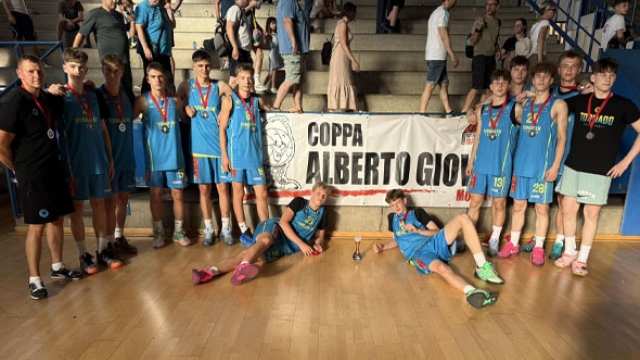
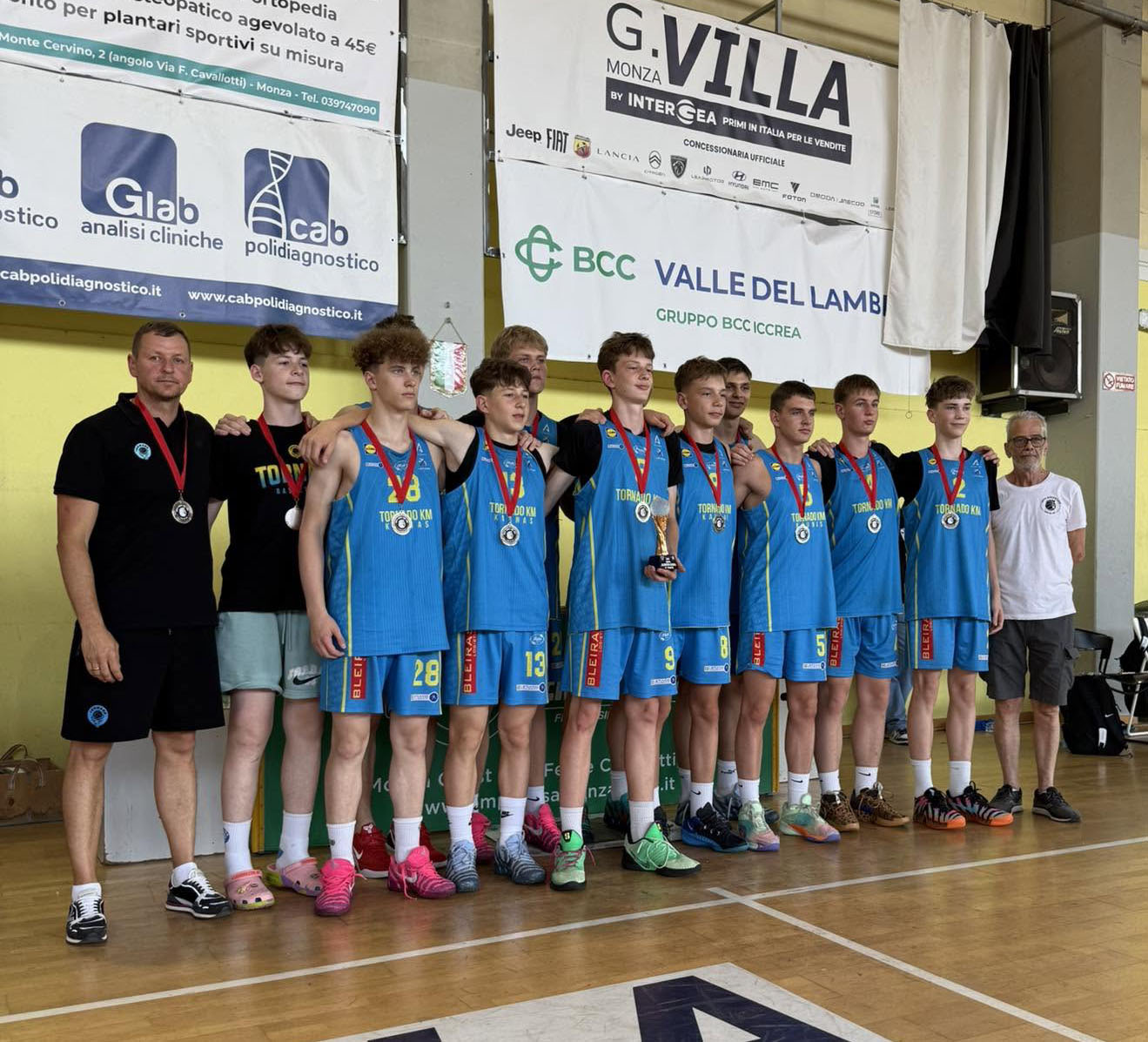 From June 12–14, Tornado Basketball School's 2011-born boys team, coached by Donatas Mikulevičius, participated in the international U15 basketball tournament “Coppa Alberto Giove” in Monza, Italy, and finished in third place. This year marked the 36th edition of the tournament, which once again attracted strong youth teams from across Europe. A total of 16 teams from Italy, Montenegro, Bosnia and Herzegovina, Austria, Estonia, Poland, the Czech Republic, the United Arab Emirates, and Lithuania competed in the event.
The tournament is named after Alberto Giove, a 15-year-old Italian basketball player who tragically lost his life in a skiing accident in the mountains 33 years ago. His parents established the tournament in his memory, and the tradition continues to this day. The event is dedicated specifically to U15 teams, bringing young players together through friendship, competition, and a shared love for basketball.
We spoke with coach Donatas Mikulevičius about the challenges, lessons learned, and the most memorable moments of the tournament.
– The team finished third in Monza. How would you evaluate the level of the tournament, and how did it differ from the competitions you usually play in Lithuania?
– Sixteen teams from nine countries participated in the tournament. We mostly faced Italian teams. They play excellent and very physical one-on-one defense, are strong athletes, and embrace contact. It was demanding for us because we are not used to that style of basketball. This is an area where we need to add more desire, energy, and aggressiveness to our own game. We simply were not as relentless as they were. The Italians are excellent in transition, play a lot of one-on-one basketball, move the ball extremely well, and avoid holding onto it or playing selfishly. The ball movement is beautiful to watch. Although we managed to defeat all the Italian teams we faced, there is still a lot we can learn from them: playing through contact, ball movement, one-on-one skills, and making the extra pass at the right moment. Too often we tried to force situations individually. I don't think we played poorly, but we relied too much on individual actions at times. Because of that, our basketball was not always as efficient as we would like, both in terms of decision-making and team play.
The Polish team was quite similar to us. We have played against teams from Poland many times before, so there were no major surprises. Montenegro's team was physical, tall, and very intelligent in their positioning. Pressuring them was difficult, so we had to spend more time defending in the half court. The Estonian national team played a style of basketball we are more familiar with and often encounter. Overall, the tournament level was very high. We played many quality games that showed us how much work still lies ahead and how much potential we still have. If we improve our effort in defense and rebounding, it will give us much more freedom on offense.
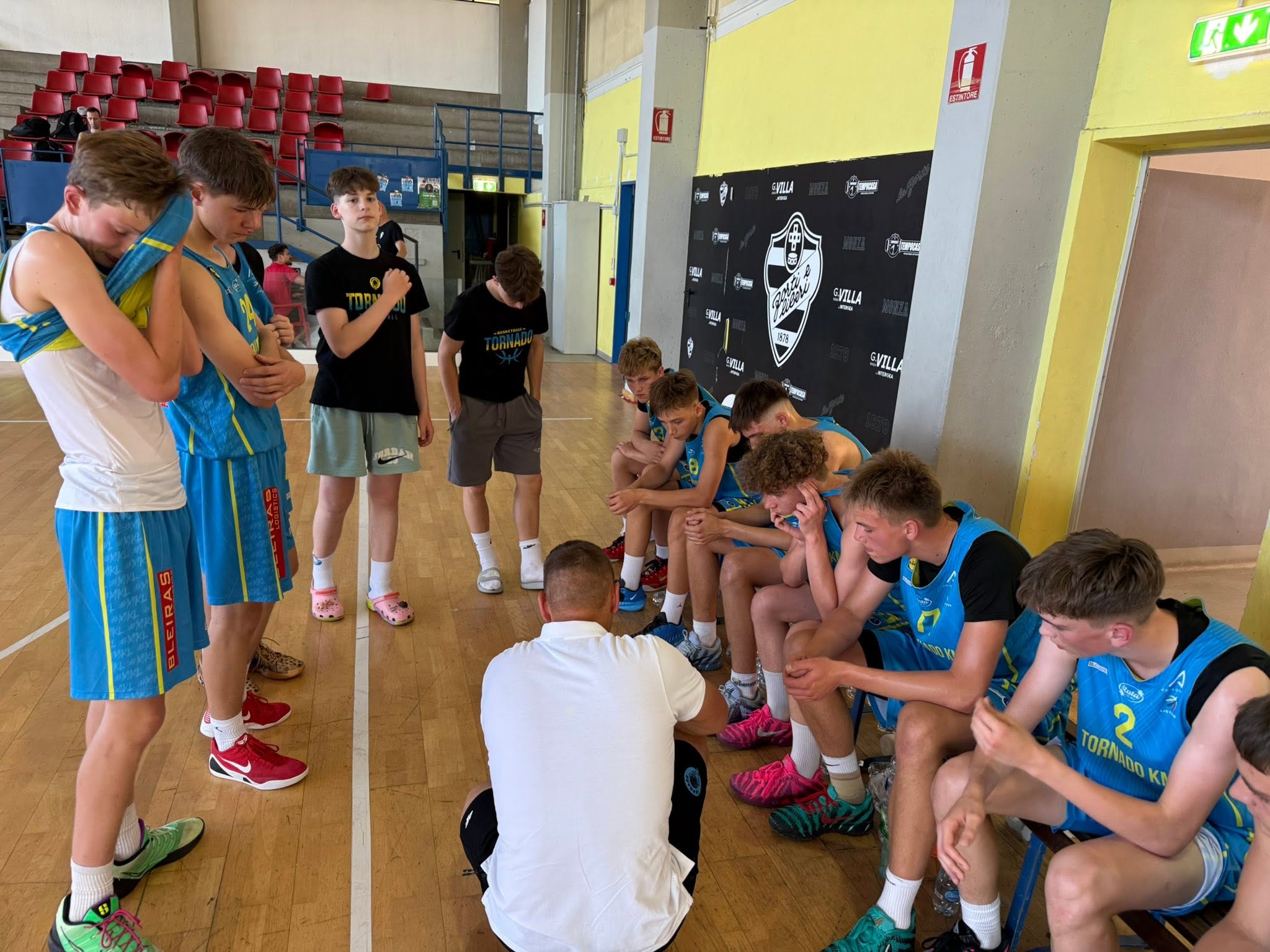 – What were the most important lessons this tournament taught the team, both in basketball and personal development?
– I believe we learned a great deal. The real question is how well we will absorb those lessons and how much we will remember. Of course, we will work on the areas that the tournament exposed, but what matters most is how much commitment the boys themselves put into improving those aspects of their game.
– What was missing in the semifinal, and what can the team take from that experience moving forward?
– I would say that circumstances were not entirely favorable in the semifinal. According to the original schedule, we were supposed to play against an Italian team, but in the end our opponent became the Estonian U15 National Team. In our opinion, Estonia was one of the strongest teams in the tournament, so that change definitely influenced the playoff path. However, we understand that unexpected situations can occur when organizing international tournaments, so we did not focus on it. Our goal was to beat whoever stood in front of us and find solutions on the court.
Unfortunately, we started the game very poorly, allowing 31 points in the first quarter. Erasing such a deficit against a strong opponent is never easy. Still, we fought back, erased the gap, and took control of the game in the third quarter. With a minute and a half remaining in the quarter, we were leading by ten points. At that point, I decided to give my leader a short rest. It seemed like the right decision, but during inbound situations we turned the ball over three consecutive times. That gave our opponents new energy, even though we had already shaken their confidence. Part of the responsibility falls on me, but as a coach you trust your team. I believe that if we had held on until the end of the quarter, we would have finished the job in the fourth. The game demanded enormous physical and mental energy. The ending was painful—we lost by six points and were left to play for third place.
I think the name itself—Estonian U15 National Team—had a psychological impact on our players. It was a painful but valuable lesson. We showed character, came back into the game, took control, but then let it slip away too easily. You have to value what you create because it costs a great deal of effort and energy.
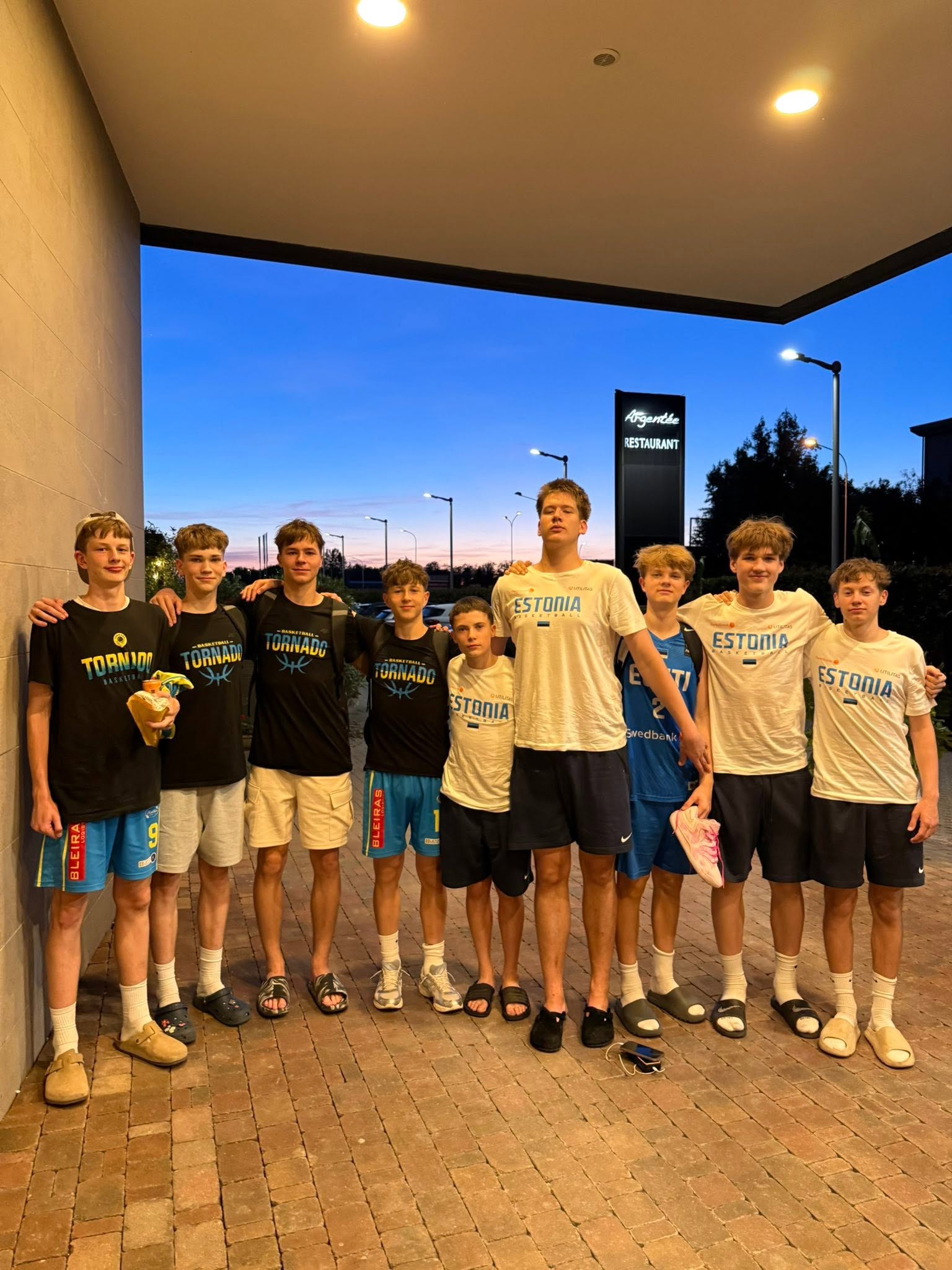 – The third-place game turned into a real thriller, requiring three overtimes. Was it the most emotional game of the season for your team?
– We only had a couple of hours to recover before facing Armani Olimpia Milano for third place. The conditions were, of course, the same for both teams. We started the game strongly and built a comfortable lead, but later allowed our opponents back into the contest, which resulted in three overtime periods. Over the course of three days, the boys played six full games consisting of four ten-minute quarters, so fatigue was certainly a factor.
I think we started very well, but eventually lost focus and stopped playing our game. At certain moments in the second half, we began waiting for the game to end, while our opponents never gave up. That gave them hope. Had we maintained our lead and started the third quarter strongly, they likely would have become much less confident. Instead, we created problems for ourselves. We wanted things to happen faster, but they actually became slower. We were playing through exhaustion. This game required tremendous mental strength, determination, and character.
Gabrielius' game-winning three-pointer was certainly a huge moment, although before that he had already knocked down two crucial three-pointers from different corners of the court. In the final seconds, with nothing left to lose, he trapped on defense, stole the ball, and as the final buzzer sounded, secured the victory for us.
– Which opponents impressed you the most, and what elements of their game would you like to bring into your own team?
– The Estonian team was very strong, but the most interesting opponents were the Italians because we played against them three times. Italian basketball was somewhat unfamiliar and difficult for us because there are not many teams in Lithuania that play in a similar way. I would like us to learn how they capitalize on fast-paced basketball. We also play quickly, but we still do not always make the best decisions at high speed.
We need to improve our decision-making, get back on defense faster after offensive possessions, and avoid the moments when we switch off and allow easy baskets in transition. I was also impressed by their physicality, aggressive defense, and one-on-one play on both ends of the floor. If we showed that same level of determination and effort in practice every day, we would become completely different players.
– International tournaments often provide much more than basketball experience. What did the players see and learn off the court while visiting Italy? And after this tournament, where do you see the greatest areas of improvement, and what will be the key focus points heading into next season?
– Yes, the boys had an opportunity to relax and step away from their usual environment. At the same time, trips like this bring additional responsibilities within the team—discipline, organization, and communication. We did not encounter any major issues, but there is always room for better communication. Just as in basketball, many lessons from life can be applied off the court. For example, communication was also something we lacked at times on defense.
At the moment, I cannot objectively evaluate how much progress we have made. We will see that next season. Everything depends on how well we absorb the lessons learned and whether we become students who learn from mistakes or continue repeating them. The priorities for next season are already clear in my mind. I know what I will demand from the team and what I want to see in our daily work. However, I will keep those details for our preparation period and for the players who will have to put them into practice. Those who truly want to improve and add new weapons to their game will come back even stronger next season.
I would also like to take this opportunity, on behalf of the entire team, to thank our director Dainius, who organized the trip, handled all logistical matters, and put together the daily schedule. That allowed me to focus entirely on basketball. I would also like to thank the supporters who traveled to cheer us on and, of course, the team itself. Not everything went exactly as planned for everyone, but every player gave his best and fought until the very end.
Now it is time to recover, catch our breath, and continue working on becoming better. Have a great summer, no matter how short it may be.
We would like to sincerely thank the tournament organizers for inviting us to participate in such a well-organized event. A special thank you goes to Lorenzo Biassoni, who took care of the teams throughout the tournament and helped resolve any organizational matters during our stay. We are grateful for the opportunity to be part of this international event and hope to meet again in Italy next year. And if your travels ever bring you to Lithuania, you will always be welcome at Tornado Basketball School. We would be delighted to show you around our academy, invite you for a cup of coffee, and, if possible, attend a EuroLeague game in Kaunas together.